Kodumbalur Moovar Koil
Magnificent 9th-century early Chola temple complex at Kodumbalur, near Trichy, built by Irukkuvel chieftain Bhuti Vikramakesari and renowned for its exquisite stone sculptures and pioneering Dravidian architecture.
About this Place
Kodumbalur Moovar Koil – A Magnificent Early Chola Temple Complex
Kodumbalur Moovar Koil, also known as Muvar Koil or the Three Temples of Kodumbalur, is one of the most important early Chola architectural monuments in Tamil Nadu. Located in Kodumbalur in Pudukkottai district, approximately 35 km from Tiruchirappalli, this remarkable heritage site preserves some of the finest examples of early medieval South Indian stone temple architecture.
The name Moovar Koil literally means "Three Temples". The original complex consisted of three similar Shiva shrines arranged in a row. Today, two of the major temple structures survive substantially, while the remains of the third shrine reveal the original layout of the complex.
The monument was commissioned by Bhuti Vikramakesari, an Irukkuvel chieftain and feudatory associated with the Cholas. An inscription at the monument records the construction of the three shrines and provides valuable information about the political and cultural history of the period.
The Government of Tamil Nadu's Pudukkottai District describes Kodumbalur as an important historical site whose architecture represents an early stage in the development of the Dravidian style. The remaining structures of Moovar Koil and the nearby Muchukundeeswarar Temple attract visitors interested in Tamil history and architecture.
The monument is protected and conserved by the Archaeological Survey of India (ASI). It is therefore best understood as a historic archaeological monument rather than a conventional active temple with daily religious services.
Why Is Kodumbalur Moovar Koil Famous?
Moovar Koil is famous for its early Chola architecture, extraordinary stone sculptures, three-shrine original plan and beautifully proportioned vimanas. It is considered one of the important monuments for understanding the transition and development of South Indian structural temple architecture.
The ASI Trichy Circle describes Moovar Koil as one of the prime examples illustrating the development of early temple architecture in South India. The monument's architectural treatment, sculptural programme and carefully proportioned structures demonstrate the technical skill of the craftsmen who built it. :contentReference[oaicite:1]{index=1}
The temple is especially interesting because it predates the enormous Chola temples of Thanjavur and Gangaikonda Cholapuram. The Government Museum's monument directory notes that the three-tiered vimana at Moovar Koil is earlier than the famous vimanas at those later Chola monuments. :contentReference[oaicite:2]{index=2}
A Landmark of Early Chola Architecture
If you want to understand how Chola temple architecture developed before the monumental Brihadisvara Temple at Thanjavur, Kodumbalur Moovar Koil is an excellent place to study. Its scale is relatively modest, but its architectural sophistication and sculptural quality are remarkable.
History of Kodumbalur
Kodumbalur is an ancient settlement with a long history in the Tamil region. The name of Kodumbalur is mentioned in the Tamil epic Silappathikaram, demonstrating that the settlement was known in the literary tradition of Tamil Nadu.
The location was strategically important because it lay in the region between the major political centres of the Chola and Pandya territories. Kodumbalur was controlled by the Irukkuvel chieftains, who maintained important political relationships with the Cholas.
The Irukkuvels were influential local rulers and military chiefs. Their association with the Cholas is particularly important for understanding why an ambitious temple complex such as Moovar Koil was constructed at Kodumbalur.
Modern archaeological work at Kodumbalur has also increased interest in the site's wider history. Archaeological excavations have investigated habitation remains in the area to better understand its cultural sequence and the historical importance of the settlement. :contentReference[oaicite:3]{index=3}
Who Built Moovar Koil?
Moovar Koil was built by Bhuti Vikramakesari, an Irukkuvel chieftain associated with the Cholas. The temple inscription is an important historical source for understanding the patronage of the monument.
According to the inscription, Bhuti Vikramakesari constructed the three shrines for himself and his two queens, Karrali and Varaguna.
The original arrangement therefore had a commemorative and dynastic character as well as a religious purpose. The three temples were conceived as a unified architectural composition.
The Three Original Shrines
- Central shrine: Associated with Bhuti Vikramakesari.
- Southern shrine: Associated with Queen Karrali.
- Northern shrine: Associated with Queen Varaguna.
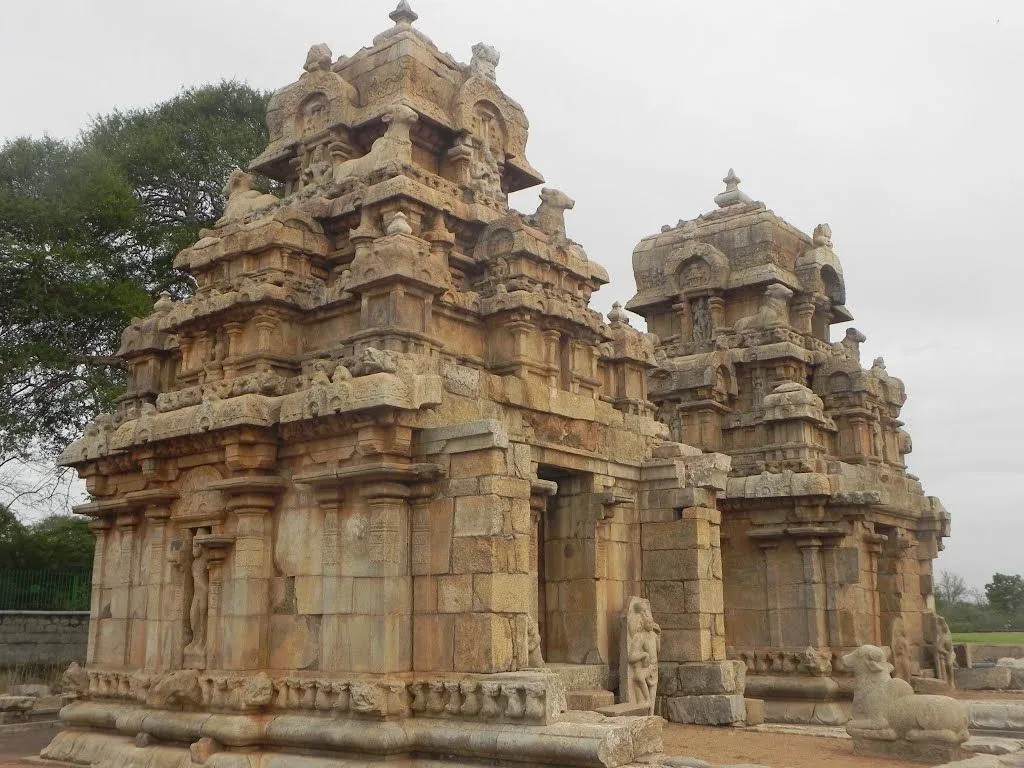
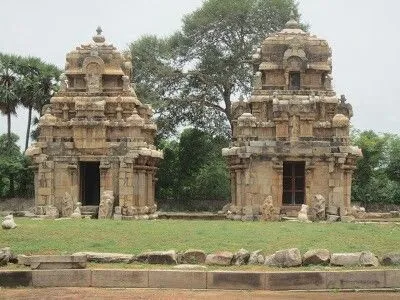
Of the original three structures, the central and southern vimanas survive substantially, while the northern shrine survives mainly at foundation level.
The Meaning of Moovar Koil
The Tamil name Moovar Koil means "Three Temples". The name directly reflects the original architectural plan of three shrines standing together.
The three temples were designed as a coordinated architectural group rather than as unrelated shrines. Their alignment and proportions demonstrate the sophisticated planning used by early medieval South Indian temple builders.
The surviving structures allow visitors to understand the original arrangement and appreciate how the architects created a unified composition using stone, vimanas, mandapas and sculptural decoration.
Architecture of Moovar Koil
Moovar Koil represents an important stage in the evolution of Dravidian temple architecture. The structures are predominantly constructed of stone and display carefully calculated proportions.
The ASI Trichy Circle describes the complex as consisting originally of three identical shrines facing west. In front of them were a maha-mandapa, vrsha-mandapa and gopura, together with a surrounding arrangement of subsidiary shrines for the parivara deities. :contentReference[oaicite:4]{index=4}
The surviving vimanas are particularly impressive. Their bases use elaborate mouldings, while the walls feature projections and niches designed to accommodate sculptures.
Three-Tiered Vimana
The surviving vimanas have multiple tiers and carefully articulated architectural elements characteristic of early Chola design.
Lotus-Style Base
The adhisthana contains distinctive lotus-like mouldings, giving the base an elegant and highly finished appearance.
Devakoshtas
Wall niches contain sculptural representations of important Hindu deities and forms of Shiva.
Makara Toranas
Decorative makara-torana elements frame several of the sculptural niches.
The Sculptures of Moovar Koil
The sculptures are among the greatest attractions of Kodumbalur Moovar Koil. The monument contains finely carved representations of different forms of Shiva, along with other deities and celestial figures.
The Government Museum's directory specifically highlights sculptures of Kalarimurti, Ardhanarishvara, Veenadhara Dakshinamurti, Bhikshatana, Gajasamharamurti, Alinganamurti and Gangadhara. These are regarded as fine examples of Tamil artistic achievement. :contentReference[oaicite:5]{index=5}
Ardhanarishvara
Shiva represented together with the feminine aspect of the divine.
Dakshinamurti
Shiva represented as the divine teacher.
Bhikshatana
The ascetic and wandering form of Shiva.
Gangadhara
Shiva associated with the descent of the River Ganga.
Gajasamharamurti
A dramatic form of Shiva associated with the destruction of the elephant demon.
Kalarimurti
A powerful representation of Shiva associated with Kala.
The Three-Tiered Vimana
One of the defining features of Moovar Koil is its three-tiered vimana. The monument's vimanas are particularly important because they illustrate an early stage in the evolution of the towering temple structures that later became characteristic of Chola architecture.
The Government Museum's monument directory notes that the vimana at Moovar Koil predates the famous vimanas at the Brihadisvara Temple at Thanjavur and Gangaikonda Cholapuram. :contentReference[oaicite:6]{index=6}
This makes the monument particularly valuable for anyone interested in understanding how Chola architects developed the ideas that eventually produced the monumental temples of the 11th century.
Moovar Koil and the Development of Chola Architecture
Chola temple architecture did not appear suddenly in its monumental form. It developed gradually through experimentation with structural stone temples, increasingly elaborate vimanas, mandapas, sculptural programmes and carefully organised temple complexes.
Moovar Koil represents an important point in this development. Its architecture is more sophisticated than many earlier small structural shrines, yet it remains considerably smaller and less monumental than the great imperial Chola temples that followed.
Comparing Moovar Koil with Vijayalaya Choleeswaram at Narthamalai, Brihadisvara Temple at Thanjavur and Gangaikonda Cholapuram provides an excellent way to understand the chronological development of Chola temple architecture.
Moovar Koil as an Archaeological Monument
Moovar Koil is protected by the Archaeological Survey of India. ASI records the monument as "Muvar Koil with surrounding sub-shrines, stone enclosure and stone well" at Kodumbalur. :contentReference[oaicite:7]{index=7}
The site has undergone conservation work over the years. Historical ASI conservation records document repairs to the temple masonry, step-well and surrounding structures, demonstrating the continuing effort to preserve the monument.
The protected status is important because the structures and sculptures are valuable archaeological evidence. Visitors should therefore treat the site as a heritage monument and avoid touching, climbing or damaging the stonework.
The Ancient Stepwell at Moovar Koil
Another interesting feature of the monument complex is its historic stepwell. The stepwell forms part of the archaeological landscape around Moovar Koil and provides evidence of traditional water management practices.
Historical archaeological records show that the stepwell has undergone conservation and repair work. The presence of a carefully constructed water structure alongside the temple demonstrates that historic temple complexes were not limited to shrines but also incorporated practical infrastructure.
Ancient Water Management
The stepwell is a valuable reminder of the engineering knowledge used in historic Tamil settlements. It adds another dimension to the Moovar Koil experience beyond temple architecture and sculpture.
Moovar Koil and Nearby Muchukundeeswarar Temple
Kodumbalur contains more than one important historic monument. The Muchukundeeswarar Temple is located close to Moovar Koil and represents another important example of early Chola temple architecture.
The Government of Pudukkottai specifically notes that the remaining structures of Moovar Koil and the Muchukundeeswarar Temple attract visitors to Kodumbalur. :contentReference[oaicite:8]{index=8}
Visitors interested in Chola architecture should ideally explore both monuments rather than visiting Moovar Koil alone.
Kodumbalur in Tamil Literature
Kodumbalur's historical importance extends beyond its monuments. The settlement is mentioned in Silappathikaram, one of the great classical Tamil epics.
This literary reference, combined with archaeological evidence and the surviving temples, makes Kodumbalur an especially interesting destination for people studying the long history of Tamil culture.
How to Reach Kodumbalur Moovar Koil
Kodumbalur is located in Pudukkottai district and is easily accessible by road from Tiruchirappalli and Pudukkottai.
From Tiruchirappalli
The Pudukkottai District Government states that Kodumbalur is approximately 35 km from Trichy. The site can be reached by road via the Trichy–Madurai side of the region. :contentReference[oaicite:9]{index=9}
From Pudukkottai
Kodumbalur is approximately 40 km from Pudukkottai according to the Pudukkottai District Government tourism information. :contentReference[oaicite:10]{index=10}
By Train
The Pudukkottai District Government lists the distance from Tiruchirappalli Railway Station at approximately 36 km. Visitors can continue by taxi or road transport after arriving by train.
By Car
Driving is one of the most convenient ways to visit Moovar Koil because the monument is located outside the main urban areas. A private car or taxi also makes it practical to combine Moovar Koil with other heritage sites around Pudukkottai.
Location of Moovar Koil
Moovar Koil
Kodumbalur, Iluppur Taluk, Pudukkottai District, Tamil Nadu, India.
The monument is located in the historic village of Kodumbalur between the Trichy and Pudukkottai region.
Moovar Koil Timings and Entry
Moovar Koil is an ASI-protected archaeological monument. Unlike an active temple, it does not operate primarily around daily pooja schedules.
The Government Museum's monument directory records an entrance fee of ₹2 in its published monument directory and notes that photography and videography require permission from the Superintending Archaeologist. :contentReference[oaicite:11]{index=11}
Because ASI visitor arrangements and ticket rates can change, visitors should verify the current entry fee and visiting hours before travelling.
Visitor Information
Archaeological Survey of India
Historic Hindu Temple Complex
Ticketed ASI Monument
Published fee information can become outdated. Confirm the current ASI ticket price before visiting.
Best Time to Visit Moovar Koil
The cooler months between October and February are generally more comfortable for exploring Kodumbalur and the surrounding heritage sites.
Early morning and late afternoon are also good options for photography because the changing sunlight highlights the stone carvings and architectural details.
During the hotter months, visitors should carry drinking water, wear suitable clothing and plan outdoor sightseeing around the cooler parts of the day.
Photography at Moovar Koil
Moovar Koil is particularly attractive for architecture and heritage photography. The surviving vimanas, sculptural panels, stone mouldings, Nandi and surrounding landscape offer many opportunities for detailed architectural photography.
However, because this is a protected archaeological monument, visitors should follow the current ASI photography regulations. The Government Museum directory specifically notes that photography and videography require permission. :contentReference[oaicite:12]{index=12}
- Do not climb on the temple structures.
- Do not touch or rub ancient sculptures.
- Do not scratch or write on the stone surfaces.
- Follow ASI photography instructions.
- Use a tripod only where permitted.
- Keep equipment and bags away from fragile architectural elements.
Why History Lovers Should Visit Moovar Koil
Early Chola Architecture
The monument provides a clear example of an early stage in the development of Chola structural temples.
Exceptional Sculptures
The temple walls preserve remarkable representations of Shiva and other Hindu deities.
Historical Inscriptions
The inscriptions provide valuable information about Bhuti Vikramakesari, the Irukkuvels and their relationship with the Cholas.
Three-Temple Concept
The original three-shrine layout makes the monument architecturally distinctive.
Places to Visit Near Kodumbalur Moovar Koil
Kodumbalur can be included in a wider heritage tour of Pudukkottai district. Several important archaeological and historic sites are accessible by road.
Muchukundeeswarar Temple
Another important early Chola temple located near Moovar Koil at Kodumbalur.
Sittannavasal
Famous for its ancient Jain heritage and remarkable rock-cut paintings.
Kudumiyanmalai
Historic temple complex famous for its musical inscriptions and architecture.
Narthamalai
Historic hill region containing Vijayalaya Choleeswaram and other important monuments.
Viralimalai
Known for the Murugan temple and its natural and cultural heritage.
Pudukkottai
Historic district with museums, temples, archaeological sites and royal heritage.
Moovar Koil and Thanjavur's Brihadisvara Temple
Travellers interested in Chola architecture should consider visiting both Moovar Koil and Brihadisvara Temple at Thanjavur.
The two monuments represent very different stages of Chola architectural development. Moovar Koil demonstrates the sophistication of the early structural temple tradition, while Brihadisvara represents the extraordinary monumental ambition of the imperial Cholas under Rajaraja I.
Studying the two sites together makes it easier to understand how the Chola architectural tradition developed from relatively compact temples into some of the largest and most technically impressive temple complexes in India.
A Suggested Kodumbalur Heritage Trip
One-Day Heritage Route
- Start from Tiruchirappalli in the morning.
- Travel to Kodumbalur and visit Moovar Koil.
- Explore the surviving vimanas, sculptures and archaeological remains.
- Visit nearby Muchukundeeswarar Temple.
- Continue towards Kudumiyanmalai or Narthamalai.
- Explore additional heritage monuments depending on available time.
- Return to Trichy or continue towards Pudukkottai.
Moovar Koil for Architecture Students
Moovar Koil is particularly valuable for architecture students and researchers. The monument provides an opportunity to study the relationship between plan, proportion, elevation, sculpture and structural engineering in an early Chola temple.
The three-shrine original plan also provides an excellent case study in architectural composition. Students can examine how repeated shrine forms were arranged into a unified complex.
The temple's surviving mouldings, wall projections, devakoshtas, makara toranas and vimana details provide useful material for studying the vocabulary of early South Indian temple architecture.
Visitor Guidelines
- Treat the monument as a protected archaeological site.
- Do not climb onto the vimanas, walls or sculptures.
- Do not touch or damage ancient carvings.
- Do not write names or markings on the stone surfaces.
- Follow ASI instructions regarding photography.
- Keep the monument and surrounding archaeological area clean.
- Carry drinking water, particularly during hot weather.
- Allow sufficient time to examine the sculptures instead of rushing through the site.
Frequently Asked Questions
1. Where is Kodumbalur Moovar Koil located?
Moovar Koil is located at Kodumbalur in Iluppur Taluk of Pudukkottai district, Tamil Nadu. It is approximately 35 km from Tiruchirappalli and about 40 km from Pudukkottai.
2. What does Moovar Koil mean?
"Moovar Koil" means Three Temples. The name refers to the original three-shrine complex constructed at Kodumbalur.
3. Who built Moovar Koil?
The monument was commissioned by Bhuti Vikramakesari, an Irukkuvel chieftain associated with the Cholas.
4. How old is Moovar Koil?
Moovar Koil belongs to the early Chola period and is generally dated to around the late 9th or early 10th century CE.
5. Are all three temples still standing?
No. The original complex consisted of three shrines. The central and southern vimanas survive substantially, while the northern shrine survives primarily at basement or foundation level.
6. Is Moovar Koil an active temple?
Moovar Koil is primarily a protected archaeological monument under the Archaeological Survey of India. It should therefore be distinguished from an actively functioning temple with regular daily poojas.
7. What is special about the architecture?
The monument is an important example of early Chola structural architecture, featuring carefully proportioned vimanas, elaborate stone mouldings, devakoshtas and exceptional sculptures.
8. What sculptures can be seen at Moovar Koil?
Important sculptural representations include Ardhanarishvara, Bhikshatana, Dakshinamurti, Gangadhara, Gajasamharamurti, Kalarimurti and other divine and celestial figures.
9. Is Moovar Koil near Trichy?
Yes. Kodumbalur is approximately 35 km from Tiruchirappalli according to the Pudukkottai District Government.
10. Is there an entry fee for Moovar Koil?
The Government Museum's published monument directory records an ASI entrance fee of ₹2. Because monument fees can change, visitors should verify the current ticket price before travelling.
11. Who maintains Moovar Koil?
The monument is protected and maintained by the Archaeological Survey of India.
12. Can I take photographs at Moovar Koil?
Photography rules apply because this is an ASI-protected monument. The Government Museum's published directory states that photography and videography require permission. Visitors should follow the current ASI instructions at the site.
Conclusion
Kodumbalur Moovar Koil is one of Tamil Nadu's outstanding early Chola architectural monuments. Its three-temple concept, surviving vimanas, sophisticated stone carvings and historical inscriptions provide an extraordinary glimpse into the architectural ambitions of early medieval South India.
Built under the patronage of Bhuti Vikramakesari, the monument also provides valuable evidence of the relationship between the Irukkuvel chieftains and the Cholas. The sculptures depicting different forms of Shiva are among the site's most impressive artistic features.
For anyone interested in Chola temples, Tamil Nadu history, Dravidian architecture, ancient Indian sculpture and archaeological sites, Moovar Koil is an excellent destination. Its relatively quiet surroundings also make it a rewarding alternative to the much busier major temple destinations of Tamil Nadu.
A visit to Moovar Koil can be combined with Muchukundeeswarar Temple, Narthamalai, Kudumiyanmalai, Sittannavasal and other heritage attractions around Pudukkottai, creating an excellent Chola heritage tour from Trichy.
Photo Gallery

Visitor Information
Opening Hours
ASI monument visiting hours - verify current timings before visiting
Entry Fee
ASI ticketed monument - verify current fee
Location
Kodumbalur, Iluppur Taluk, Pudukkottai District, Tamil Nadu, India
Contact
+91 123-456-7890
Frequently Asked Questions
Everything you need to know about visiting Kodumbalur Moovar Koil
 Translate