Pallava Cave Temples
Ancient rock-cut cave temples at Rockfort, Trichy, featuring remarkable 6th and 7th century Pallava-era sculptures and architecture carved directly into the massive natural rock.
About this Place
Pallava Cave Temples, Trichy – Ancient Rock-Cut Heritage of Tiruchirappalli
The Pallava Cave Temples at Rockfort in Tiruchirappalli are among the lesser-known historical treasures of Trichy. Carved directly into the enormous natural rock formation at the heart of the city, these ancient cave shrines provide a fascinating glimpse into the development of South Indian rock-cut architecture.
The Tiruchirappalli City Municipal Corporation identifies two Pallava cave temples below the Shiva temple at Rockfort. The caves contain beautiful sculptures associated with the 6th and 7th centuries, making them an important part of the city's ancient architectural heritage.
The caves are located within the larger Rockfort Temple complex, which also includes the historic Thayumanaswamy Temple and the famous Uchi Pillayar Temple at the summit. This makes the Pallava caves an excellent stop for travellers exploring the history and architecture of Rockfort.
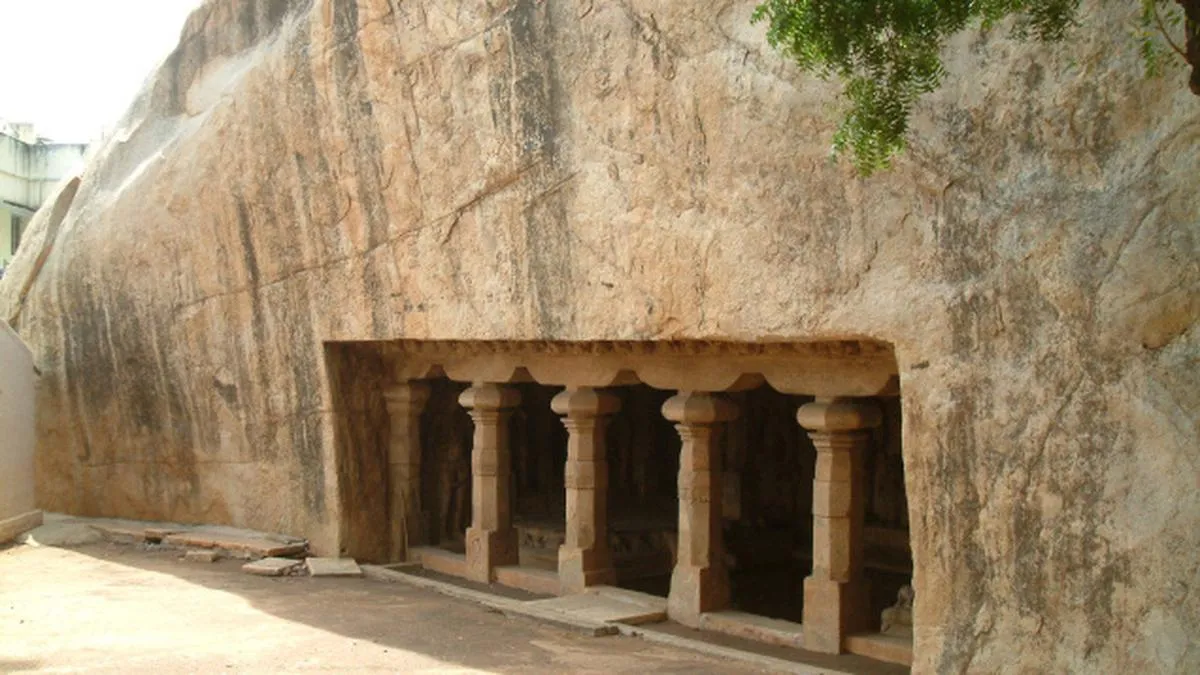
Unlike large structural temples constructed from separately cut blocks of stone, these cave shrines were created by removing rock from the living mountain itself. The pillars, halls, niches and sculptural elements are therefore part of the natural rock formation.
Why Are the Pallava Cave Temples Famous?
The Pallava Cave Temples are famous for their rock-cut architecture, ancient sculptures and historical connection with the Pallava period. They are particularly valuable for understanding how temple builders and sculptors experimented with carving sacred spaces directly into natural rock.
The Pallavas played an important role in the development of South Indian temple architecture. Their rock-cut monuments at places such as Mahabalipuram, Mandagapattu and other sites demonstrate the transition from excavated cave shrines towards more elaborate structural temple forms.
The caves at Rockfort form part of this broader architectural tradition. Their relatively hidden position also means that many visitors who climb Rockfort to see Uchi Pillayar may not spend much time exploring the cave temples.
A Hidden Heritage Attraction in Trichy
The Pallava Cave Temples are ideal for travellers who want to discover something beyond the better-known Rockfort temples. They offer a quieter opportunity to appreciate ancient stone carving and the architectural history of Tiruchirappalli.
History of the Pallava Cave Temples
The Pallava dynasty was one of the major powers of southern India between approximately the 6th and 9th centuries. Pallava rulers made significant contributions to the development of temple architecture, sculpture and religious art.
The Rockfort caves belong to the period when rock-cut architecture was developing rapidly in South India. The Tiruchirappalli municipal information identifies the sculptures in the two caves as belonging to the 6th and 7th centuries.
Rock-cut temples were created by excavating halls and sanctuaries directly into natural rock. This technique required detailed planning because the sculptors could not simply remove the carved stone and replace it if an architectural mistake was made.
The survival of these caves within the modern city of Trichy provides an important connection between the ancient history of the region and its contemporary urban landscape.
The Two Cave Temples at Rockfort
The Rockfort complex contains two cave temples associated with the Pallava period. They occupy different positions around the rock and are traditionally described as the upper and lower cave temples.
The caves form part of a much larger historic landscape that includes the natural rock, Thayumanaswamy Temple, Uchi Pillayar Temple, fortifications, ancient inscriptions and other structures added during later periods.
Upper Cave Temple
The upper cave is located partway up the Rockfort hill, close to the route leading towards Uchi Pillayar Temple. It is particularly interesting for visitors studying early Pallava rock-cut architecture.
The cave contains a rock-cut hall with pillars and sculptural elements. Traditional studies associate this cave with the Pallava ruler Mahendravarman I, an important patron of early rock-cut architecture.
The cave is commonly associated with the name Lalitankura Pallavesvara Griham, a name connected with Mahendravarman's titles and Pallava architectural tradition.
Lower Cave Temple
The second cave is situated lower on the Rockfort formation. It is another example of the ancient rock-cut tradition associated with the historic development of the site.
The two caves together demonstrate the importance of Rockfort as a long-lived religious and architectural centre. The surrounding complex was subsequently expanded and modified by different rulers and communities over many centuries.
Pallava Rock-Cut Architecture
One of the most fascinating aspects of the Pallava Cave Temples is the way architecture and natural geology are combined. Instead of constructing a temple on top of the rock, the ancient craftsmen carved a sacred space inside the living rock.
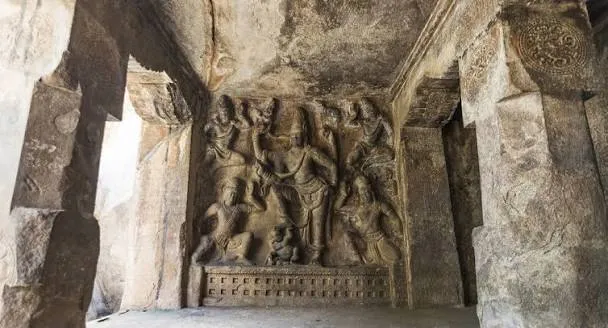
Typical features of Pallava cave architecture include rock-cut pillars, pilasters, mandapas, sanctum spaces and sculpted figures. The proportions and forms of the pillars are particularly useful to historians studying the evolution of early South Indian architecture.
Rock-Cut Pillars
Pillars were carved from the same rock mass as the rest of the cave, creating an integrated architectural structure.
Sculptural Panels
Ancient sculptures and reliefs provide valuable evidence of the religious art of the period.
Mandapa
The excavated hall creates a transition between the exterior rock face and the sacred interior.
Natural Rock
The entire shrine is integrated with the ancient geological formation of Rockfort.
The Rockfort Connection
The Pallava caves should not be viewed separately from the larger Rockfort heritage complex. The massive rock itself is one of the defining geographical features of Tiruchirappalli.
The Rockfort rises prominently above the surrounding city and has been an important strategic and religious landmark for centuries. The modern temple route takes visitors through several layers of history.
At the base is the Manikka Vinayakar Temple. Further up the rock is the Thayumanaswamy Temple, and at the summit stands Uchi Pillayar Temple. The Pallava cave temples add an even older architectural layer to this historic landscape.
Rockfort Heritage Layers
- Ancient natural rock formation
- Early rock-cut cave temples
- Thayumanaswamy Temple
- Uchi Pillayar Temple
- Nayak-period fortifications and structures
- Modern religious and cultural activity
Inscriptions and Historical Evidence
Rockfort is important not only because of its temples but also because inscriptions and other historical remains help document the long history of the site.
The wider Rockfort rock contains evidence from different historical periods. The Tiruchirappalli City Municipal Corporation notes that inscriptions dating back to the 3rd century BC can be found on the rock.
These earlier inscriptions demonstrate that the rock was significant long before the later medieval temple structures and fortifications that visitors see today.
Pallava Cave Temples and Mahendravarman I
Mahendravarman I was one of the most important early Pallava rulers associated with the development of rock-cut temple architecture. His reign marked an important stage in the evolution of stone architecture in southern India.
Pallava monuments associated with Mahendravarman can be found at several locations across Tamil Nadu. The architectural tradition includes excavated cave shrines featuring characteristic pillars, pilasters and sculptural compositions.
The Rockfort cave tradition is therefore important when studying the wider history of Pallava architecture, even though the much more famous monuments of Mahabalipuram attract the majority of heritage tourists.
Connection with Mahabalipuram
Visitors interested in the Pallava Cave Temples at Trichy can also explore the famous Group of Monuments at Mahabalipuram. UNESCO identifies Mahabalipuram as a major Pallava architectural centre containing rock-cut cave temples, monolithic rathas, open-air reliefs and structural temples created primarily during the 7th and 8th centuries.
Famous Mahabalipuram cave monuments include the Varaha Cave, Mahishasuramardini Cave and other mandapas. These sites provide a broader context for understanding the rock-cut architectural tradition associated with the Pallavas.
Together, the Trichy caves and Mahabalipuram monuments demonstrate the importance of rock as a medium for South Indian religious architecture.
Why the Pallava Cave Temples Are Important
Ancient Heritage
The caves preserve architectural and sculptural traditions dating back to the early medieval period.
Rock-Cut Architecture
The temples demonstrate how ancient craftsmen transformed natural rock into sacred architectural spaces.
Pallava History
The caves form part of the wider architectural legacy associated with the Pallava dynasty.
Trichy Heritage
They add an ancient archaeological layer to the famous Rockfort religious complex.
Things to See at the Pallava Cave Temples
- Rock-cut halls: Observe how the temple interiors were excavated directly from the rock.
- Pillars and pilasters: Study the characteristic architectural forms of early South Indian caves.
- Ancient sculptures: Look closely at the surviving sculptural details associated with the caves.
- Natural rock formation: Appreciate the relationship between the temple and the enormous Rockfort geological formation.
- Historic inscriptions: Explore the wider Rockfort complex for inscriptions and evidence of its long history.
- Thayumanaswamy Temple: Combine the cave visit with the major Shiva temple located higher on the rock.
- Uchi Pillayar Temple: Continue to the summit to visit the famous Ganesha shrine and enjoy views over Tiruchirappalli.
How to Reach Pallava Cave Temples
The Pallava Cave Temples are located within the Rockfort Temple Complex in Tiruchirappalli. Because they are part of the Rockfort area, visitors can reach them using the same transport options used to visit the main Rockfort temples.
By Road
Rockfort is located in central Tiruchirappalli and is easily accessible from major parts of the city by car, taxi, auto-rickshaw and local buses.
By Train
Tiruchirappalli has major railway connections with Chennai, Madurai, Coimbatore, Thanjavur, Bengaluru and other cities. From Tiruchirappalli railway stations, visitors can continue to Rockfort by local transport.
By Air
Tiruchirappalli International Airport is the nearest airport. Visitors arriving by air can reach central Trichy by taxi or other local transportation.
Visiting the Pallava Cave Temples with Rockfort
The best way to experience the caves is to treat them as part of a complete Rockfort heritage walk rather than as an isolated attraction.
Suggested Rockfort Route
- Start at the base of Rockfort.
- Visit Manikka Vinayakar Temple.
- Continue up the rock towards Thayumanaswamy Temple.
- Explore the Pallava cave temples where access is permitted.
- Continue towards Uchi Pillayar Temple.
- Enjoy the panoramic views of Trichy and the Cauvery region.
- Return through the Rockfort complex and explore the surrounding heritage area.
Best Time to Visit
The cooler months from approximately November to February are generally more comfortable for exploring Trichy and walking around Rockfort.
During the hotter months, an early morning or late afternoon visit can be more comfortable. The Rockfort climb involves steps and uneven stone surfaces, so visitors should allow enough time and avoid rushing.
Religious festivals can bring significant crowds to the Rockfort temples. If you want to experience the complex during a festival, check the current temple schedule before travelling.
Photography at the Pallava Cave Temples
The caves are particularly interesting for photographers and architecture enthusiasts because the natural rock, pillars, sculptures and shadows create strong visual compositions.
- Check current photography restrictions before taking photographs.
- Do not use flash where it is prohibited.
- Do not touch or climb on sculptures.
- Avoid disturbing worshippers.
- Use the natural rock formations as part of architectural compositions.
- Take time to photograph architectural details rather than only wide views.
Visitor Guidelines
- Wear comfortable footwear suitable for climbing steps.
- Dress respectfully around the temple complex.
- Follow instructions from temple and heritage authorities.
- Do not touch ancient sculptures or inscriptions.
- Do not litter around the rock or temple premises.
- Be careful on steep and uneven sections of the Rockfort climb.
- Respect religious activities taking place inside the complex.
- Verify access to individual cave sections before planning your visit.
Places to Visit Near the Pallava Cave Temples
The central location of Rockfort makes it easy to combine the Pallava caves with several of Trichy's most important attractions.
Uchi Pillayar Temple
Famous hilltop Ganesha temple at the summit of Rockfort.
Thayumanaswamy Temple
Historic Shiva temple located within the Rockfort complex.
Teppakulam
Historic temple tank located near the base of Rockfort.
Natharsha Dargah
Historic Sufi shrine and important part of Trichy's multicultural heritage.
Srirangam
Major Vaishnavite pilgrimage centre located on the Cauvery island.
Thiruvanaikaval
Historic Jambukeswarar Temple, one of the Pancha Bhoota Sthalas.
Pallava Cave Temples for History Lovers
For history enthusiasts, the Pallava Cave Temples provide an opportunity to examine architecture from a period when South Indian temple construction was undergoing major transformation.
The caves can be particularly interesting when compared with later Chola, Pandya, Vijayanagara and Nayak monuments. The difference in construction methods demonstrates how temple architecture evolved from early excavated shrines towards increasingly elaborate structural temples.
A heritage tour combining Rockfort with Thanjavur, Kumbakonam, Mahabalipuram and other ancient temple centres can provide a broader understanding of Tamil Nadu's architectural history.
Frequently Asked Questions
1. Where are the Pallava Cave Temples located?
The Pallava Cave Temples are located within the Rockfort Temple Complex in Tiruchirappalli, Tamil Nadu.
2. How many Pallava cave temples are there at Rockfort?
The Tiruchirappalli City Municipal Corporation identifies two Pallava cave temples below the Shiva temple at Rockfort.
3. How old are the Pallava Cave Temples in Trichy?
The Trichy municipal tourism information describes the sculptures in the caves as dating from the 6th and 7th centuries.
4. Who built the Pallava Cave Temples?
The caves are associated with the Pallava period. The upper cave is traditionally associated with Mahendravarman I. Historical attribution of individual caves should be treated carefully because different studies have proposed different dates and builders.
5. Are the Pallava Cave Temples part of Rockfort?
Yes. The caves are located within the historic Rockfort landscape and are below the Thayumanaswamy Shiva temple.
6. What is special about these cave temples?
Their most important feature is their rock-cut construction. The halls, pillars and sculptural elements were carved directly into the natural Rockfort formation.
7. Can tourists visit the Pallava Cave Temples?
The caves form part of the Rockfort heritage complex, but access to individual cave sections can vary. Visitors should follow the current instructions of temple and heritage authorities.
8. Are the Pallava Cave Temples worth visiting?
Yes, particularly for travellers interested in ancient Indian architecture, archaeology, sculpture and the history of Tamil Nadu. They are also a good addition to a visit to the better-known Rockfort temples.
Conclusion
The Pallava Cave Temples of Tiruchirappalli are a remarkable but relatively understated part of Trichy's heritage. Hidden within the massive Rockfort formation, the caves preserve evidence of an early stage in the development of South Indian rock-cut temple architecture.
Their 6th and 7th century sculptures, rock-cut halls and connection with the Pallava architectural tradition make them especially valuable for history and architecture enthusiasts.
A visit becomes even more rewarding when the caves are explored together with Thayumanaswamy Temple and Uchi Pillayar Temple. This allows travellers to experience several layers of Trichy's history in one location—from the ancient rock formation and early cave temples to medieval religious architecture and the later history of Rockfort.
If you are creating a list of historical places to visit in Trichy, the Pallava Cave Temples deserve a place alongside Rockfort, Srirangam, Thiruvanaikaval and the city's other heritage attractions.
Photo Gallery
Visitor Information
Opening Hours
As per Rockfort Temple Complex timings
Entry Fee
FREE
Location
Rockfort, Tiruchirappalli, Tamil Nadu, India
Contact
+91 123-456-7890
Related Articles & Guides
Famous Temples Around Trichy
Explore the magnificent temples that make Trichy a spiritual destination for millions of devotees.
Exploring Rockfort Temple and Its History
Journey to the top of Trichy's iconic Rock Fort and discover its fascinating history and spiritual significance.
Frequently Asked Questions
Everything you need to know about visiting Pallava Cave Temples
 Translate